Source Portable Geomembrane Hot Air Welder for Garden, Environmental, and Transportation Projects
Compare 30 Portable Geomembrane Hot Air Welder options from China suppliers. These machines feature automatic or semi-automatic control, air cooling, and varying power ratings to suit environmental, geotechnical, and hydraulic projects.
Key considerations
Products List

Hot Air Welder and Geomembrane Hot Wedge Welder for HDPE Geomembrane Welding Machine
$2600.00 - $2800.00
MOQ: 1 Pieces


Geomembrane Welder/Hot Wedge Welding Machine Equipment/Welding Machine
$1550.00 - $1600.00
MOQ: 1 Sets


Hot-Air Welder/Automatic/Hand-Held Welding Machine for Waterproof Membrane/Geomembrane
$200.00 - $3000.00
MOQ: 1 Set


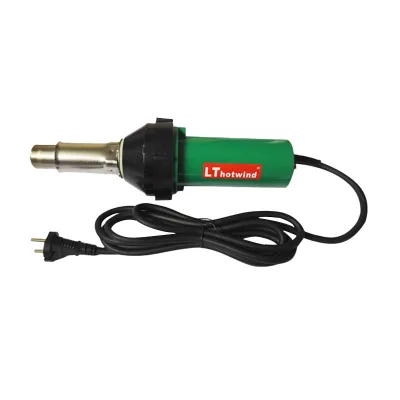


Geomembrane Welding Machine Geomembrane Welders 0.5-6m/Min 0.2mm~2.0mm
$500.00 - $1500.00
MOQ: 1 Pieces


Comprehensive Sourcing Guide
Portable Geomembrane Hot Air Welder Sourcing Guide
Sourcing the correct equipment for geomembrane installation requires a clear understanding of the specific welding technologies available in the market. The term "Portable Geomembrane Hot Air Welder" often overlaps with other categories such as extrusion welders, wedge welders, and automatic seam welders. Buyers must distinguish between machines that use heated air to soften thermoplastic materials and those that use extruded filler or pressure-based wedge systems. The observed product landscape includes devices ranging from simple manual units to semi-automatic and fully automatic systems, each serving different project scales and material thicknesses. Understanding these distinctions is critical for aligning equipment capabilities with the specific requirements of your environmental, geotechnical, or hydraulic projects.
The procurement process for these machines involves evaluating a wide range of specifications, from power consumption and welding speed to the specific materials they can handle. Listings indicate a diverse array of options, including models designed for HDPE (High-Density Polyethylene) and other thermoplastics. The presence of both low-frequency and intermediate-frequency options suggests that buyers need to match the machine’s output to the thermal properties of the geomembrane being used. Furthermore, the distinction between manual, semi-automatic, and automatic controls significantly impacts labor efficiency and seam consistency, making it essential to define operational needs before engaging with suppliers.
Product Scope and Observed Listing Signals
The current market for portable welding equipment shows a broad spectrum of capabilities, with observed price points ranging from approximately $0.60 to $3,000 USD. This wide variance reflects differences in automation levels, power ratings, and build quality. Lower-priced items may represent basic manual units or accessories, while higher-end models likely correspond to semi-automatic or automatic systems with advanced features like digital temperature control and integrated cooling systems. Buyers should interpret these price ranges as indicative of the tier of equipment rather than a fixed cost, as final pricing will depend on customization, volume, and specific technical requirements. The minimum order quantity (MOQ) also varies, typically ranging from 1 to 500 units, offering flexibility for both single-project purchases and large-scale fleet acquisitions.
Product attributes observed in listings highlight key differentiators such as power source, cooling method, and style. Most units are electric, operating on AC power with working voltages commonly listed as 220V/110V or 230V/120V at 50Hz, though some models support 50/60Hz frequencies. Cooling is predominantly air-cooled, which is standard for portable units to maintain operational temperature without the need for water lines. The style of the welder varies, with "disc" and "vertical" configurations appearing in the data, indicating different ergonomic designs for handling seams in various orientations. Additionally, the material thickness capability is a critical signal, with some machines rated for 0.2mm-1.5mm and others for 1.0mm-3.0mm, directly influencing which geomembrane types can be effectively welded.
Technical Specifications to Verify
When evaluating technical specifications, the welding speed and seam strength are paramount for ensuring project timelines and structural integrity. Observed data indicates welding speeds ranging from 0.5 to 5.0 meters per minute, a range that allows for both precise manual adjustments and faster automated runs. Buyers must verify that the selected machine can maintain consistent speed under load, as fluctuations can lead to weak seams. Additionally, the seam strength is a critical performance metric, with some listings citing a seam strength of 85% relative to the base material. This percentage indicates the durability of the weld joint, and buyers should request specific test data or certification of this metric to ensure compliance with project engineering standards.
Power consumption and heating temperature ranges are other vital technical parameters to scrutinize. Total power ratings observed include 800W, 1000W, and 1800W, with corresponding weights of 5kg, 9kg, and 20kg. Higher power units generally offer faster heating and the ability to handle thicker materials, but they also add significant weight, which can impact portability on large sites. The heating temperature range is typically cited as 50~450 degrees Celsius, which must be adjustable to match the melting point of the specific geomembrane material, such as HDPE or PVC. Buyers should also verify the overlap width and welding width specifications, with observed values including 10cm overlap and 12.5mm or 15mm welding widths, to ensure the machine fits the planned seam design.
Compliance and Safety Documentation
Safety and regulatory compliance are non-negotiable aspects of sourcing industrial welding equipment. The insulation class is a key safety feature, with Class II insulation observed in some listings, indicating double insulation for enhanced protection against electric shock. Buyers must ensure that the equipment meets the electrical safety standards of the destination country, particularly regarding voltage compatibility and plug types. The presence of CE certification is noted in the background data, which is a mandatory conformity mark for products sold within the European Economic Area. However, buyers should verify that the CE marking is accompanied by a valid Declaration of Conformity and that the machine adheres to relevant low-voltage directives, regardless of the final installation location.
Beyond electrical safety, documentation related to material compatibility and welding standards is essential for quality assurance. The observed product standards include ISO, CE, and SGS, suggesting that some manufacturers adhere to international quality management and testing protocols. Buyers should request copies of these certifications and verify their validity with the issuing bodies. Additionally, the warranty period is a significant indicator of manufacturer confidence, with 12-month warranties observed for certain models. This warranty should clearly cover components such as heating elements, motors, and control boards, and specify the process for obtaining replacement parts or technical support in the event of a malfunction.
Cost Drivers and Commercial Terms
Several factors influence the total cost of ownership for portable geomembrane welders, including customization, packaging, and origin. Customization is available for many suppliers, allowing buyers to tailor voltage, plug types, or control interfaces to their specific needs. However, customization may impact lead times and unit costs, so buyers should clarify any additional fees or minimum order requirements for customized configurations. The origin of the products is predominantly China (Mainland), which often offers competitive pricing but requires careful attention to shipping logistics and import duties. Buyers should factor in freight costs, which can be significant for heavier units like the 20kg models, and consider the total landed cost rather than just the unit price.
Packaging and shipping terms also play a role in the commercial agreement. Observed packaging methods include crates and wooden boxes, which provide robust protection for delicate electronic components during transit. The choice of packaging can affect the dimensional weight of the shipment, influencing freight charges. Buyers should negotiate clear Incoterms, such as FOB or CIF, to define responsibility for shipping and insurance. Additionally, payment terms should be structured to mitigate risk, potentially using escrow services or letters of credit for larger orders. It is also advisable to confirm the availability of spare parts and consumables, such as heating nozzles or filters, as these ongoing costs can impact the long-term economics of the equipment.
Supplier Qualification and Quality Control
Evaluating supplier qualifications is crucial for ensuring the reliability of the purchased equipment. The presence of ISO9001 certification indicates that the manufacturer has implemented a quality management system, which should result in more consistent product quality and better documentation practices. Buyers should verify the current status of these certifications and inquire about the supplier’s experience in manufacturing welding equipment for geomembrane applications. A supplier with a proven track record in environmental or geotechnical projects is more likely to understand the specific demands of seam welding and provide appropriate technical support.
Quality control processes should be transparent and rigorous. Buyers should ask for details on incoming material inspections, in-process quality checks, and final product testing. For welding machines, this might include testing the temperature stability, voltage regulation, and welding speed accuracy. Requesting a pre-shipment inspection report or arranging for a third-party inspection can provide additional assurance. Furthermore, suppliers should provide clear user manuals and technical diagrams in English, ensuring that operators can safely and effectively use the equipment. Establishing a clear communication channel for technical queries before purchase can also help gauge the supplier’s responsiveness and expertise.
Long-Term Procurement Checks
Long-term procurement success depends on the availability of after-sales support and spare parts. Buyers should confirm the supplier’s policy for warranty claims, including whether they provide replacement parts directly or require the unit to be shipped back for repair. Given the portable nature of the equipment, on-site repairs are often preferred, so having a local service network or the ability to ship parts quickly is essential. Additionally, buyers should inquire about the availability of training materials or video tutorials for operators, as proper technique is critical for achieving high-quality welds.
Finally, buyers should consider the scalability of their procurement strategy. If the project expands or additional sites are added, the supplier should be able to provide consistent quality and pricing for additional units. Establishing a long-term partnership with a reliable supplier can lead to better terms, priority support, and access to new product developments. Regularly reviewing the performance of the equipment in the field and providing feedback to the supplier can also help drive continuous improvement in product design and functionality, ensuring that the procurement strategy remains aligned with evolving project needs.
FAQs
What is the working voltage for this welder?
The working voltage is 220V/110V 50Hz or 230V/120V 50Hz depending on the specific model configuration. This ensures compatibility with various regional power standards for garden and environmental projects.
Can the machine handle different material thicknesses?
Yes, the welding machine accommodates material thickness ranging from 0.2mm to 3.0mm. This flexibility allows it to process various geomembrane types used in hydraulic and geotechnical applications effectively.
Which certifications do these machines hold?
These units hold ISO9001, ISO, and CE certifications. Such standards confirm that the manufacturing processes meet international quality and safety requirements for industrial equipment used in environmental projects.
How fast can the machine weld materials?
The welding speed ranges from 0.5 to 5.0 meters per minute. This adjustable rate allows operators to optimize efficiency while maintaining seam strength at 85% of the base material.
What is the total power consumption of the unit?
Total power consumption varies between 800W and 1800W depending on the specific model selected. This range supports different operational needs while maintaining an insulation class of Class II for safety.
Where are these machines manufactured?
These machines are manufactured in China Mainland. This origin ensures access to established supply chains for components like HDPE materials and ensures compliance with international shipping standards.
What is the warranty period for the equipment?
The equipment comes with a 12-month warranty period. This coverage protects buyers against manufacturing defects and ensures reliability for long-term use in stationery, electronic, or garden supply applications.